
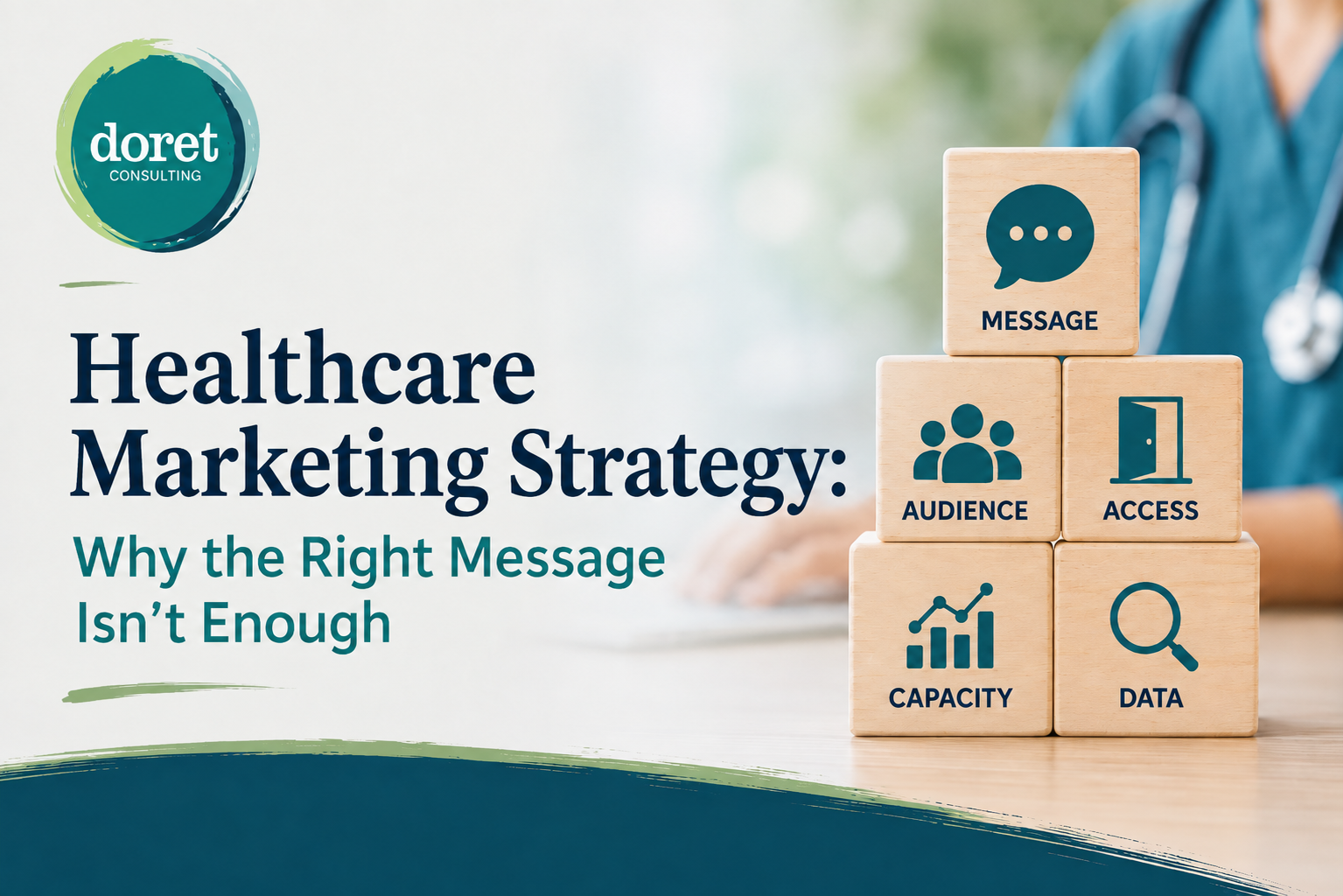
Healthcare Marketing Strategy: Why the Right Message Isn’t Enough
Hi There! It’s your marketing co-pilot again, coming to share how to avoid some common marketing mistakes.
Healthcare marketing campaigns can have compelling, creative, thoughtful messaging, and a clear call to action, and still miss the mark.
Why? Because campaign success depends on more than what the email says. It also depends on who receives it, whey the receive it, whether the organization can support the response, and how success will ultimately be measured.
Here are two common patient marketing mistakes we see regularly and the steps healthcare marketers can take to avoid them.
Mistake 1: Building the Wrong Audience
A service line wanted to increase appointments, so the marketing team developed an email campaign for patients who appeared eligible for care. The content was engaging, the creative was approved, and the campaign was deployed.
Then the calls began.
Some patients had already received treatment outside of the system, others recently visited a provider for a similar issue, and some took the action to book, only to learn that the next available visit is several months out.
The audience may have been technically accurate, but it was missing key pieces of the patient story.
Before finalizing an audience, healthcare marketers should consider:
Whether the patient’s history is recent and relevant
Whether the patient already has an established provider or specialist relationship
Whether the service line has the capacity to accommodate additional appointments
These considerations should happen early in the planning process.
It is also important to think through potential edge cases. How might the message be received by someone who has already completed treatment? What happens when a patient clicks to schedule, but cannot find an appointment?
A technically accurate audience is not always the right audience. The goal is not simply to identify everyone who could qualify, it is to identify the patients for whom the message is relevant, timely, and actionable.
Mistake 2: Measuring the Wrong Things
Historically, email marketing performance was primarily evaluated through open rates, clicks, bounces, and unsubscribes.
Those metrics still provide useful information, but they do not tell the full story.
Today, privacy features and automated email scanning can influence engagement reporting. An open does not always mean a patient actively read the message, and a click does not necessarily mean the patient completed the intended action.
That does not make engagement metrics meaningless. Monitoring open and click trends over time can help marketers identify changes in audience behavior, deliverability, content performance, or campaign execution.
The mistake is treating those metrics as the final measure of success.
Healthcare marketers should evaluate campaign performance at several levels.
Engagement
Did recipients open, click, unsubscribe, or otherwise interact with the communication?
Conversion
Did the patient complete the intended next step, such as scheduling an appointment?
Operational and patient outcomes
Did the campaign generate appointments? Was the service line prepared to accommodate the response? Did the communication help the patient move forward in their care journey?
The best time to determine how a campaign will be measured is before it launches.
Marketing teams should work with internal stakeholders to define:
The campaign’s primary goal
The baseline performance before launch
The desired number of appointments, calls, referrals, or other outcomes
How campaign recipients will be connected to resulting appointments
Whether the organization has access to the data needed for reporting
Whether the service line has the capacity to support the anticipated demand
Connecting a campaign recipient to an appointment is often one of the most difficult parts of healthcare marketing measurement. It may require coordination across marketing platforms, CRM systems, scheduling tools, call centers, and clinical data sources. Establishing and facilitating this is one of the most impactful ways Doret supports health systems.
Without that connection, marketers may know that a patient clicked but not whether the campaign influenced care.
Build for the Outcome, Not Just the Send
Launching a healthcare campaign is not the finish line.
Effective patient marketing begins with a clear understanding of who should receive the message, why it is relevant, when it should arrive, and what action the patient should realistically be able to take.
It also requires a measurement strategy that goes beyond opens and clicks to evaluate whether the campaign contributed to meaningful patient and organizational outcomes.
At Doret, we help healthcare organizations connect marketing strategy, patient data, operational readiness, and measurement so campaigns generate meaningful action—not just activity.
Let’s talk about how to make your next campaign more measurable,
actionable, and effective.
